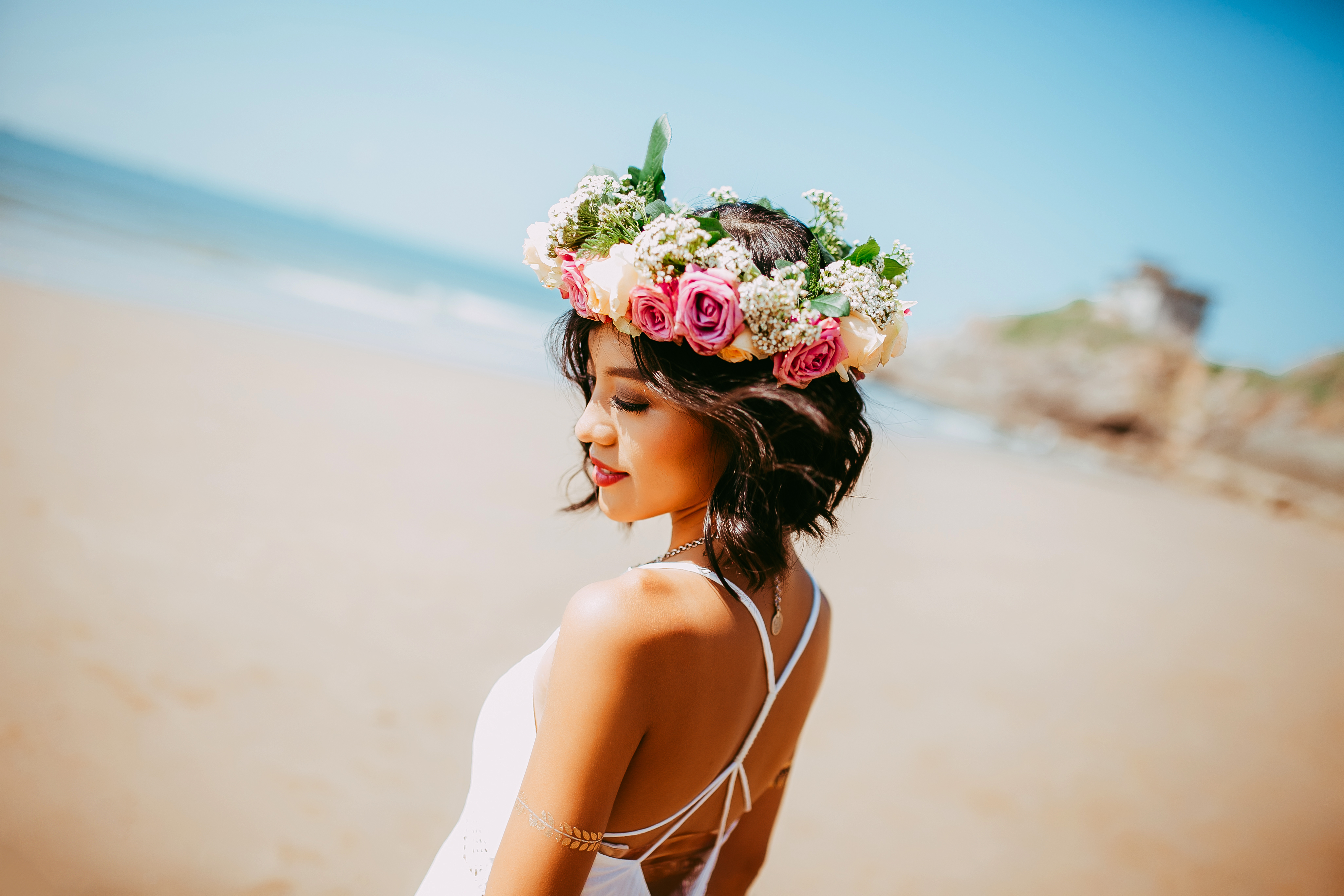
The first light of dawn gilded the beach, turning the sand to liquid gold and painting the waves in soft pinks and oranges. I stood on the porch of our beach house, coffee in hand, and watched Lila—her purple cap perched on her head, red shorts glowing in the sunrise—as she bent to pick up a seashell. Her black curly hair fell over her shoulders, catching the light like threads of dark silk, and when she stood up, holding the shell up to the sky to inspect it, I felt my chest tighten. Women on the beach are glorious, I thought. But none more so than her.
She’d woken up before me, whispering, “I want to catch the sunrise—come if you want, but I won’t wake you,” and I’d smiled, rolling over to let her go. But I’d followed ten minutes later, unable to miss the chance to see her in this light: relaxed, free, her bare feet sinking into the cool sand, her hands brushing over the waves as they lapped at the shore. She turned when she heard my steps, grinning, and held out the seashell—a small, pearlescent one with a purple tint. “For the memory box,” she said. I walked over, taking the shell and tucking it into my pocket, then wrapped my arm around her waist. “You look amazing,” I said. She laughed, pushing me playfully. “It’s just the sunrise,” she said. “And this old cap.” I shook my head, kissing her cheek. “No,” I said. “It’s you. Women on the beach are glorious—but you? You’re everything.”
By mid-morning, the beach had woken up: families set up towels, kids laughed as they chased seagulls, and Mrs. Kosta waved at us from her spot near the driftwood. Lila had taken off her cap, letting her curls blow in the breeze, and was sitting on our six-pack towel, teaching Mrs. Kosta’s granddaughter, Sofia, how to build a sandcastle. “You have to pack the sand tight,” she said, showing Sofia how to press her hands into the pile. “Like you’re giving it a hug.” Sofia giggled, copying Lila’s movements, and I sat a little way off, sketchbook in hand, drawing them—Lila’s smile, Sofia’s tiny hands, the way the sun hit their hair. Every few minutes, Lila would glance over at me, her eyes crinkling at the corners, and I’d give her a thumbs-up. She’d blush, turning back to Sofia, but her smile would stay, bright and warm.
“Want a muffin?” I called, holding up the container of banana muffins we’d baked the night before. Lila nodded, taking one from me and breaking it in half to share with Sofia. They sat together, crumbs dusting their cheeks, and talked about the rose we’d pressed—Lila pulled the memory box from her beach bag, opening it to show Sofia the dried rose and the seashells we’d collected. “We save the pretty things,” she said, her voice soft. Sofia’s eyes widened, and she held out a small rock she’d found. “Can we save this?” she asked. Lila nodded, tucking the rock into the box. “Of course,” she said. “Every pretty thing deserves to be remembered.” I watched them, my heart full, and thought again: Women on the beach are glorious. Not just for their beauty, but for the way they love—softly, fiercely, making the world feel like a safer, sweeter place.
As the afternoon turned to evening, the beach quieted down. Sofia went home with Mrs. Kosta, waving goodbye, and Lila and I walked to our cove, hand in hand. She’d put her cap back on, and her red shorts were covered in sand, but she didn’t care. “Remember when we found that wilted rose here?” she said, stopping at the rocks where we’d picked it. I nodded, squeezing her hand. “You said we’d give it a new life,” I said. She smiled, pulling the memory box from her bag and opening it to show me the pressed rose. “We did,” she said. “Just like we give each other new life, every day.” We sat on the rocks, watching the sunset, and Lila leaned her head on my shoulder. The sky turned fiery orange, and her curls glowed, like she was lit from within.
“Women on the beach are glorious,” I said, quietly. She looked up at me, her eyes soft. “Why did you say that?” I kissed her, slow and deep, the taste of salt and banana muffins on her lips. “Because it’s true,” I said. “But mostly because you’re here. You make the beach brighter, the sun warmer, the moments sweeter. You’re my glorious woman.” She laughed, tears shining in her eyes, and hugged me tight. “You’re cheesy,” she said. “But I love you.”
That night, we hung the new seashell from the morning on the porch, next to the lavender plants and the red mask. Lila sat on the swing, her purple cap in her lap, and I sat beside her, holding her hand. We talked about the day—the sunrise, Sofia, the sandcastle—and I told her again how glorious she was. She smiled, leaning into me, and we watched the stars come out, the sound of waves in the background.
Love isn’t just about grand gestures or perfect moments. It’s about seeing the glory in the person you love—whether they’re picking seashells at sunrise, teaching a little girl to build a sandcastle, or holding a pressed rose in their hands. It’s about Lila, with her curly hair and her purple cap, her red shorts and her kind heart. It’s about knowing that women on the beach are glorious—but none more so than the one who’s yours, forever.
And as I held her close that night, I knew—I’d spend the rest of my life telling her how glorious she is. Every sunrise, every sunset, every moment in between. Exactly how she deserves.