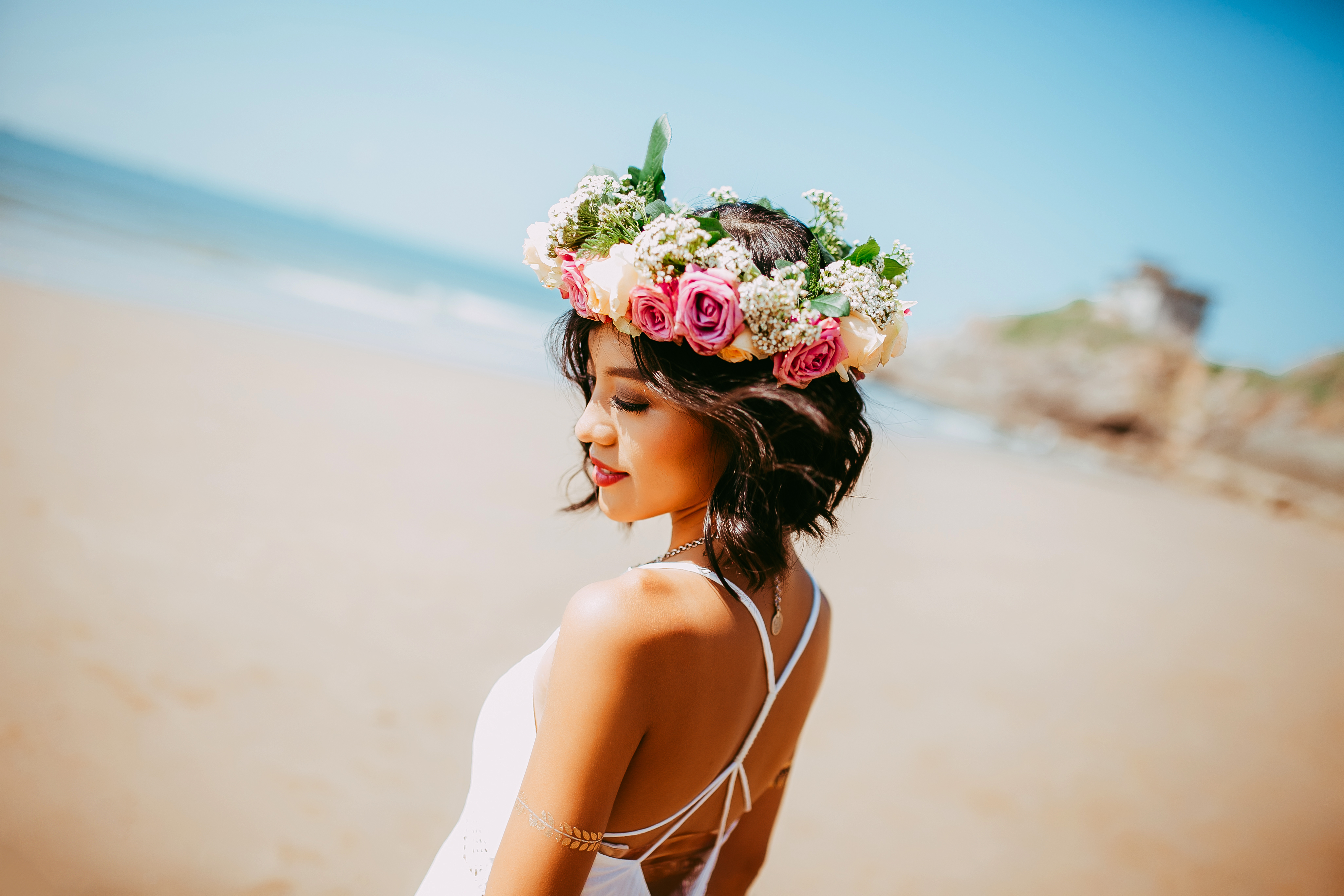
The morning breeze carried the scent of lavender from our porch as I flipped through my sketchbook, pausing at the drawing of Lila and Shell on the beach. I’d just added the final details to Shell’s tiny paws when the bedroom door creaked open—and there she was. “Now you can see me on yellow,” Lila said, spinning slowly, her new yellow dress swishing around her ankles. The fabric was soft, sunflower-hued, and it glowed against her dark curly hair, which she’d left loose today (no purple cap, just a small shell hairpin I’d found for her last week). I set down my pencil, my breath catching. She’d mentioned wanting a new dress for the village’s upcoming seafood festival, but I’d had no idea she’d picked yellow—bright, warm, like the sun that lit up our beach every morning.
“Wow,” I said, standing up to walk over to her. I reached out, brushing a strand of hair from her face, and my fingers grazed the edge of her dress. “It’s perfect. You’re perfect.” Lila laughed, her cheeks turning pink, and swatted my hand playfully. “Stop being cheesy,” she said—but her eyes were shining. “I saw it at the market yesterday. Mrs. Kosta said yellow would ‘bring out my smile.’” I nodded, pulling her close. “She was right. This dress? It makes you look like happiness.” Shell, who’d been napping at my feet, trotted over, sniffing the hem of Lila’s dress and wagging her tail. “Even Shell approves,” Lila said, bending down to scratch the puppy’s ears.
We decided to take an extra-long walk that morning, Lila in her yellow dress, Shell on her purple leash (a cheerful contrast to the fabric), and me with my sketchbook tucked under my arm. The beach was quiet—most families wouldn’t arrive until later—and the sand still held the coolness of night. Lila walked ahead, her dress fluttering in the wind, and Shell ran circles around her, chasing seagulls that dipped low over the waves. I stopped to sketch them: Lila’s back turned to me, one hand waving at Shell, the yellow dress glowing against the blue ocean. When I called her name, she turned, grinning, and Shell jumped up to nudge her hand. “This is my favorite part of the day,” she said, as I caught up. “You, me, Shell… and now this dress.” I squeezed her hand, pressing a kiss to her knuckles. “Mine too,” I said. “Especially now that I can see you on yellow.”
By midday, we’d reached the village square, where a vendor was selling fresh banana smoothies. Lila ordered two—extra honey, just how we liked them—and we sat on a wooden bench, Shell curled up at our feet. A group of children walked by, staring at Lila’s dress, and one little girl pointed, saying, “Mommy, look! She looks like a sunflower!” Lila laughed, waving at the girl, and I smiled, watching her. She’d always had a way of making people feel warm—whether she was teaching Sofia to build sandcastles or sharing banana muffins with strangers—and the yellow dress only made that glow brighter. “Remember when we first moved here?” she said, sipping her smoothie. “I was so nervous about leaving the gym, about not having the ivy bench. Now… this feels like home.” I nodded, thinking of our memory box back at the house—filled with seashells, the pressed rose, Shell’s toy—and how this yellow dress would soon be a part of that story too.
That evening, we took Shell to our cove to watch the sunset. Lila spread out the six-pack towel, and we sat together, her head on my shoulder, as the sky turned orange and pink. The setting sun painted her yellow dress in gold, making it look like it was on fire, and I pulled out my sketchbook again, determined to capture this moment. “You’re drawing me again?” Lila said, grinning. “Always,” I replied. “Especially when you look like this—like you’re part of the sunset.” She leaned up, kissing me, and the taste of banana smoothie lingered on her lips. Shell, who’d been chasing a seashell, trotted back to us, dropping the shell at Lila’s feet. “For the memory box,” Lila said, picking it up and tucking it into her dress pocket.
When we got home, I hung my new sketch of Lila—yellow dress, sunset, Shell at her feet—on the wall next to the six-pack towel and the red mask. Lila stood beside me, her arm around my waist, and sighed. “Our wall’s getting full,” she said. “Good,” I replied. “It means we’re making lots of memories.” She turned to me, her eyes soft, and said, “I love that you notice these things—my dress, the sunset, Shell’s little gifts. It makes me feel… seen.” I kissed her forehead, pulling her close. “How could I not notice?” I said. “Now you can see me on yellow—and every color, every moment, you’re the first thing I see.”
That night, we added the seashell from the cove to our memory box, along with a small swatch of yellow fabric I’d cut from an old scarf (a tiny reminder of Lila’s dress). Shell curled up at the foot of our bed, and we lay together, talking about the festival next week—how Lila would wear her yellow dress, how we’d bring banana muffins to share, how Shell would probably chase every dog in the square. “I’m happy,” Lila said, her voice quiet. “More happy than I ever thought possible.” I squeezed her hand. “Me too,” I said. “Because of you. Because of us. Because now I can see you on yellow—and every day with you is brighter.”
Love isn’t just about grand gestures. It’s about the little things: a yellow dress that makes her smile, a sketch captured in the sunset, a puppy who brings seashells as gifts. It’s about Lila—her curly hair, her kind heart, the way she lights up a room (and a beach) in yellow. It’s about knowing that no matter what color she wears, she’ll always be the brightest thing in my world.
And as I held her close that night, listening to Shell’s soft snores, I knew—I’d spend the rest of my life chasing these moments: the sunsets, the sketches, the yellow dresses, and the woman who made them all worth it. Exactly how we wanted it.