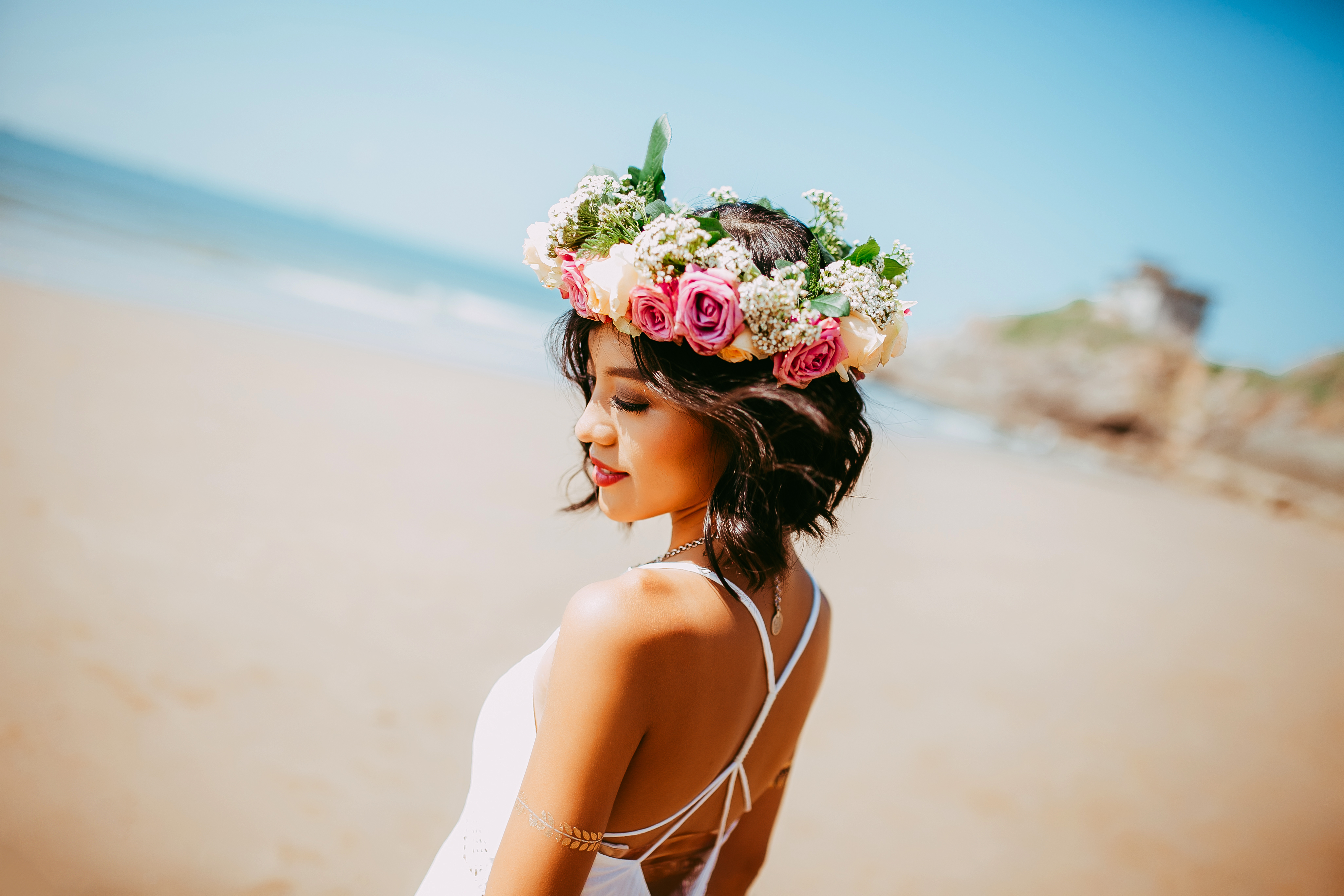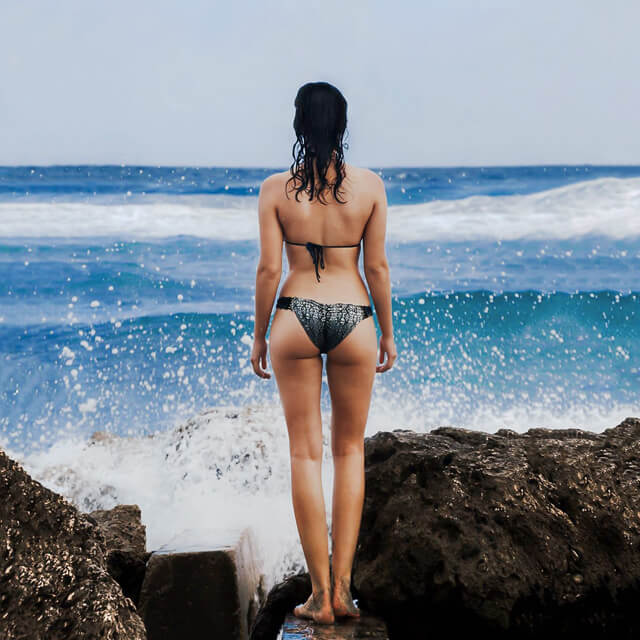
The first light of dawn painted the horizon in soft pink, but my eyes were fixed on the blue ocean—deep, vast, stretching out to meet the sky like a never-ending hug. Lila sat beside me on the six-pack towel, her legs crossed, wearing that beige belly dress she loved (still a little sand-stained from our night on the terrace) and her purple shell hairpin. In her hand, she held a half-eaten banana muffin (extra cinnamon, just how I’d baked them that morning), and she took a slow bite, her gaze never leaving the waves. “Loving the blue ocean is better,” she said, quietly, like she was sharing a secret. I turned to her, my heart skipping a beat. “Better than what?” I asked. She smiled, leaning her shoulder against mine. “Better than anything. Better than cities, better than noise… better than any dream I ever had.”
We’d woken up early, drawn to the beach by the sound of waves—Shell had trotted ahead of us, her purple leash bouncing, eager to chase the seagulls that dipped low over the water. Now, she lay at our feet, dozing, while we sat in silence, watching the ocean. The blue was brighter than usual today, like someone had mixed a bucket of sky into the water, and every wave that crashed onto the shore felt like a gentle hello. “Remember when we first saw the ocean together?” Lila said, taking my hand. I nodded—we’d driven to the coast from the gym apartment, nervous and excited, and Lila had run barefoot into the water, her purple ribbon flying, yelling, “It’s so blue!” I’d stood on the shore, sketchbook in hand, and drawn her that day—her smile, the blue water around her ankles, the way the sun hit her curly hair. That sketch still sat in our memory box, tucked between the swatch of her belly dress and the lighthouse photo.
Lila took another bite of her muffin, crumbs dusting her lower lip. I wiped them away with my thumb, and she leaned up to kiss me—soft, sweet, the taste of banana and cinnamon on her lips. “The ocean’s always been here for us,” she said, pulling back. “When we found Shell, huddled in the rocks by the cove—she was scared, but the waves kept her company. When Marisol and Nikos visited, we danced in the pool, but we kept looking at the blue ocean through the window. Even that night on the terrace, smoking that mint cigarette—all I could think about was how the moon made the ocean look like silver.” I squeezed her hand, staring at the waves. She was right. The blue ocean wasn’t just water—it was a witness to our love: the messy, the quiet, the perfect.
Shell woke up, stretching, and trotted toward the water, her tail wagging. Lila laughed, standing up and brushing sand from her belly dress. “Come on,” she said, pulling me with her. “Let’s walk to the cove.” We followed Shell, our feet sinking into the cool sand, the blue ocean to our left. The waves lapped at our ankles, and Lila stopped, closing her eyes and letting the water wash over her feet. “It feels like it’s holding us,” she said, her voice soft. I wrapped my arms around her waist, resting my chin on her shoulder. “It is,” I said. “Just like I do.” She turned in my arms, her eyes shining, and kissed me—slow, deep, the sound of waves mixing with our quiet breaths.
Later, we sat on the rocks at the cove, Shell curled up in Lila’s lap, and talked about the future. “I want to teach Shell to swim here,” Lila said, grinning. “Can you imagine? Her little paws paddling in the blue ocean?” I laughed, nodding. “And we’ll bake banana bread every Sunday, and add a new seashell to the memory box every month, and watch the sunset over the ocean every night.” She leaned her head on my shoulder, her curly hair brushing my cheek. “Loving the blue ocean is better,” she said again, “because it’s better with you. Alone, it’s just water. With you? It’s home.”
When we walked back to the house, the sun was higher, and the blue ocean glowed in the light. Lila held my hand, and Shell trotted beside us, carrying a small seashell in her mouth (a new addition to the memory box, we decided). We stopped at the porch, and Lila hung her belly dress on the rail to air out, then turned to me, her arms around my neck. “I love you,” she said. “More than the blue ocean. More than banana muffins. More than all the memories we’ve made.” I kissed her, my hands on her waist. “I love you too,” I said. “Forever. More than the ocean, too.”
That night, we added Shell’s new seashell to the memory box, along with a small note Lila wrote: “Loving the blue ocean is better—because it’s better with you.” We sat on the terrace, drinking hot chocolate with banana honey, and watched the blue ocean turn dark under the moon. Shell lay at our feet, and Lila leaned against me, her head on my chest. “I’m happy,” she said, her voice quiet. “More happy than I ever thought possible.” I squeezed her hand, staring at the ocean. “Me too,” I said.
Love isn’t just about words—it’s about the blue ocean that holds our memories, the belly dress that feels like freedom, the banana muffins that taste like home. It’s about Lila, with her curly hair and her soft smile, the way she looks at the ocean like it’s a friend. It’s about knowing that loving the blue ocean is better—but only because I get to love it with her.
And as I held her close that night, listening to the waves and her quiet snores, I knew—our love would be like the blue ocean: deep, vast, forever. Exactly how we wanted it.