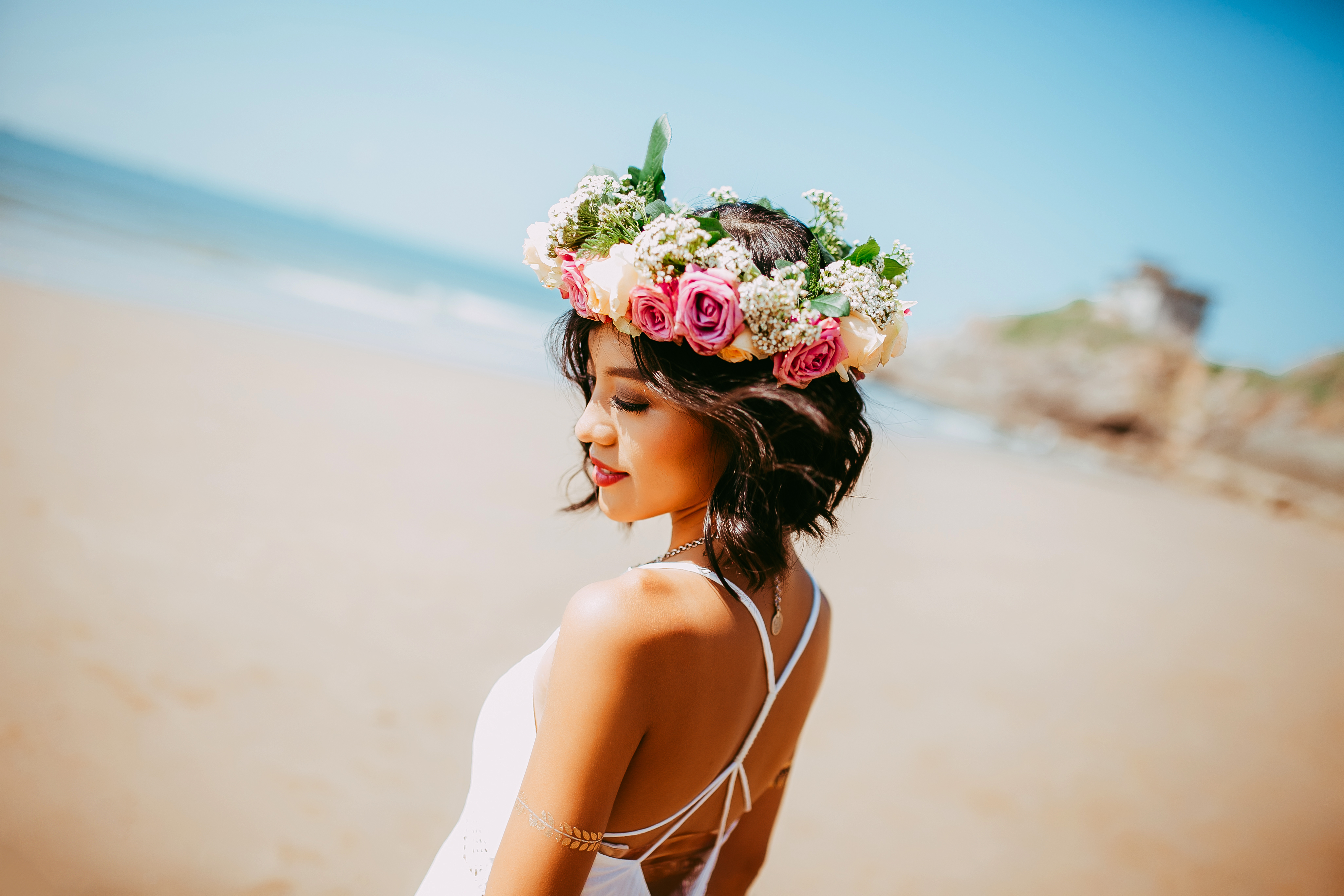
The first time I noticed the ring, we were sitting on the vine-wrapped bench, Marisol’s black curly hair falling over her shoulder as she stirred her iced tea. The sunlight caught something silver on her left hand—a thin band, simple, no gemstone—and my chest tightened. For a second, I forgot how to speak, my eyes fixed on that ring, on the way it glinted when she lifted her hand to tuck a curl behind her ear. Is she married? The question burned in my throat, but I forced a smile, flipping through my sketchbook like I was looking for something.
It had been three months since she’d moved back—three months of weekends at the bench, of late-night walks to the strawberry stand, of me drawing her curls until my hand ached. I’d fallen deeper than I’d ever imagined, but that ring… it hung between us like an unspoken wall. I’d caught myself staring at it a dozen times: when she passed me a book, when she brushed crumbs off my shirt, when she held my hand as we walked through the park. Each time, I’d bite my tongue, scared to ask—scared the answer would shatter the little world we’d built.
One rainy Saturday, we took shelter in the small café near the park. Marisol ordered her usual lavender latte, and as she handed the barista her card, the ring caught the café’s warm light again. “Nice ring,” the barista said, smiling. Marisol’s fingers brushed the band, and she laughed—a little too quickly. “Thanks. It was my grandma’s.” My shoulders relaxed, but only a little. A family heirloom, then—but why wear it on her left ring finger? The question lingered, but I let it go, not wanting to push.
That night, she invited me over to her apartment for dinner. The place smelled like garlic and basil, and her bookshelves were lined with poetry collections—some with my sketches tucked between the pages. She was in the kitchen, stirring a pot of pasta, when I noticed a photo on the fridge: Marisol and an older woman, both smiling, the same silver ring on the woman’s finger. “That’s my grandma,” she said, noticing my gaze. “She gave me the ring before she passed. Said it was for ‘the one who makes you feel like home.’” She turned to me, her dark eyes soft, and my heart raced. “I’ve been wearing it because… it feels like she’s here, you know? But lately… I’ve been wondering if I’m wearing it for the right reason.”
I stepped closer, my hand brushing hers—the one with the ring. “What do you mean?” I asked, my voice quiet. She took a deep breath, and her curls fell forward, hiding her face for a second. “I mean… I like you. A lot. More than I’ve liked anyone in a long time. But I didn’t want you to get the wrong idea—about the ring, about me.” She lifted her hand, twisting the band. “It’s not a wedding ring. Not yet, anyway.” My breath caught, and I smiled, pulling her closer. “Good,” I said, “because I’ve been wanting to ask you something too.”
I reached into my pocket, pulling out a small sketchbook—one I’d made just for her. The cover was a drawing of the vine-wrapped bench, and inside, every page was a sketch of her: her laughing, her reading, her with strawberries in her hair. The last page had a note, written in my messy handwriting: “I loved the lady with black curly before I knew her name. I love her now, even with her grandma’s ring. Will you let me be the one who makes her feel like home?”
Marisol’s eyes filled with tears, and she hugged me, her curls brushing my neck. “Yes,” she said, her voice muffled against my chest. “A thousand times yes.” She pulled back, taking the ring off her finger and setting it on the counter. “I’ll still wear it,” she said, “but not to hide. To remember—her, and us, and how far we’ve come.” I kissed her, slow and soft, the taste of garlic on her lips, and for the first time, there was no wall between us. No unspoken questions, no scared silence—just us, and the promise of something real.
A month later, we went back to the vine-wrapped bench. The sun was setting, painting the sky pink, and Marisol’s curls were tied back with a yellow ribbon—one I’d bought her. I pulled a small box from my pocket, and when I opened it, inside was a tiny silver ring, shaped like a curl. “It’s not your grandma’s,” I said, “but it’s yours. If you want it.” She laughed, tears streaming down her face, and held out her left hand—the one that used to wear her grandma’s ring. I slipped the new ring on her finger, and it fit perfectly.
She leaned her head on my shoulder, and we watched the sun go down, the vines rustling around us. “You know,” she said, “my grandma would’ve loved you. She always said the best love stories start with a question—even a scared one.” I kissed the top of her head, my hand in hers, our rings brushing together. “Yeah,” I said, “but the best ones end with ‘yes.’”
Now, when we sit on the bench, Marisol wears both rings: her grandma’s on her right hand, mine on her left. And every time I look at them, at her black curly hair catching the sun, I’m glad I didn’t let that first question scare me away. Love isn’t about having all the answers—it’s about being brave enough to ask, and lucky enough to get the answer you’ve been hoping for.
I loved the lady with black curly then, and I love her now—ring, curls, and all. And I’ll keep loving her, every day, for all the questions still to come.